26650 vs 18650 Battery in Applications
Blog | Published by Alex on January 5, 2026
Key Considerations for 26650 and 18650 Battery Selection
In the field of cylindrical lithium-ion batteries, the 26650 and
18650 battery are two dominant models. Differences in their dimensions give rise to variations in capacity, power output, and other performance metrics, which ultimately define their respective application scopes. Many users face confusion when selecting a battery: as both are cylindrical lithium-ion batteries, how to choose the right one for specific use cases? This article focuses on the core differences in their applications, analyzing the adaptation logic of each model with practical scenarios to help you make an accurate selection.
Basic Parameter Differences Between 18650 and 26650 Battery
First, let’s clarify the basic parameter differences: the 26650 lithium-ion battery has a diameter of 26mm and a length of 65mm, with a capacity typically ranging from 3000mAh to 6000mAh. In contrast, the 18650 lithium-ion battery features a diameter of 18mm and a length of 65mm, with a capacity mostly between 1200mAh and 4200mAh. The larger size of the 26650 endows it with higher capacity and power output but makes it bulkier. On the other hand, the
18650 excels in compact size and high energy density, making it suitable for scenarios with limited space. These performance disparities directly lead to a clear division of labor between the two in terms of application fields.
26650 Battery Applications: High-Power & Long-Endurance Heavy-Duty Scenarios
Thanks to its large capacity and strong discharge capability, the 26650 has become the core power source for heavy-duty equipment. In the power tools sector, devices such as electric drills and chainsaws require instantaneous high-power output and long-term continuous operation. The large capacity of the 26650 can reduce charging frequency, and its stable discharge performance prevents power interruptions during operation, significantly improving work efficiency. In the new energy transportation field, low-speed electric vehicles, electric tricycles, and other models with high endurance requirements can effectively extend their driving range by adopting 26650 battery packs, meeting the needs of daily commuting and short-distance transportation.
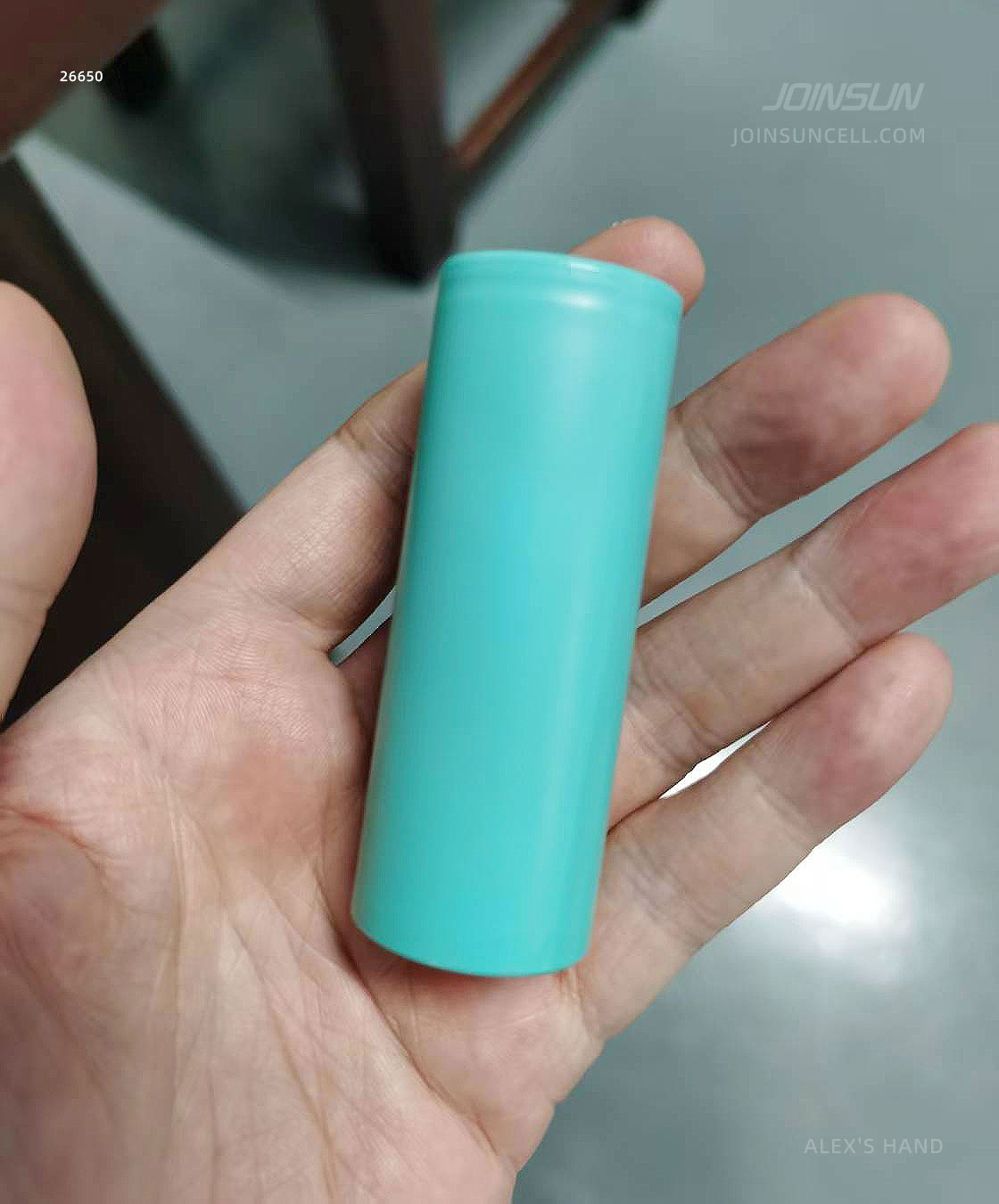
26650 Battery: Core Applications in Energy Storage and Outdoor Lighting
The energy storage sector is another core application area for the 26650. Scenarios such as solar energy storage stations and household backup power supplies require batteries to have large capacity storage capabilities and long cycle life. The 26650 can achieve more than 2000 charge-discharge cycles under 100% Depth of Discharge (DOD) conditions, stably undertaking the storage and release of renewable energy. Additionally, in the outdoor high-intensity lighting field, professional rescue flashlights, long-range searchlights, and other devices have strict requirements for endurance and brightness. The 5000mAh large capacity of the 26650 can support continuous operation in high-brightness mode for 4-6 hours, far surpassing the endurance performance of the 18650 battery, making it an essential power source for outdoor exploration and rescue missions.
18650 Battery Applications: Dominating Portable Electronics Market
With its compact size and high energy density, the 18650 has become a staple in the consumer electronics field. In laptop computers, the small size of the 18650 can flexibly fit into the internal space of the device while providing sufficient endurance to support mobile work. Portable power banks also generally use 18650 battery; their lightweight nature makes the power banks more portable, catering to emergency charging needs during daily commutes. In electronic cigarettes, small portable lighting, and other micro-devices, the compact size of the 18650 is irreplaceable, allowing these devices to maintain portability while delivering a stable endurance experience.
18650 Battery: Additional Applications in Lightweight Power and Medical Equipment
Beyond consumer electronics, the 18650 is also suitable for some lightweight power scenarios. Small electric scooters, electric balance bikes, and other portable transportation tools are limited by their body size and weight and cannot accommodate bulky 26650 battery packs. The high energy density of the 18650 battery enables sufficient endurance within a small volume, balancing portability and practicality. Furthermore, in the medical equipment field, small monitors, portable ventilators, and other devices have extremely high requirements for battery size and stability. The compact design and reliable performance of the 18650 can meet the precise power supply needs of medical equipment.
Selection Guide: How to Choose Between 26650 and 18650 Batteries
The key factor in choosing between the 26650 and 18650 battery lies in the space constraints and power consumption requirements of the application scenario. If the equipment has ample space and requires high power and long endurance (e.g., heavy-duty tools, energy storage equipment, professional outdoor lighting), the 26650 is the preferred choice. If the equipment is small in size and demands high portability (e.g., laptops, power banks, small electronic devices), the 18650 battery is a better option.
Complementary Roles of 26650 and 18650 Batteries
The 26650 and 18650 lithium-ion batteries are not superior or inferior to each other but rather complementary due to their different adapted scenarios. Clarifying the space, power consumption, and endurance needs of your specific usage scenario will help you accurately match the appropriate battery model. Whether it is for powering heavy-duty equipment or ensuring the endurance of portable devices, selecting the right battery model is crucial to maximizing equipment performance.
Related Articles
The World's First 10,000mAh NCM Li-Ion Cell: JOINSUN INR26750-100D Ushers in a New Era of High-Capacity Cylindrical Batteries