21700 Battery Next 10 Years
Blog | Published by Alex on July 30, 2026
The Big Picture: A Shift in Growth Drivers
Over the next decade, the
21700 battery market will transition from being primarily driven by electric vehicles (EVs) to being propelled by three new pillars:
1. AI Infrastructure & Data Center Energy Storage
2. High-Performance Hybrid Electric Vehicles (HEVs)
3. Low-Altitude Economy (eVTOLs, drones, and robotics)
Market analysts project a compound annual growth rate (CAGR) of approximately 25.8% for the global 21700 battery market between 2026 and 2030.
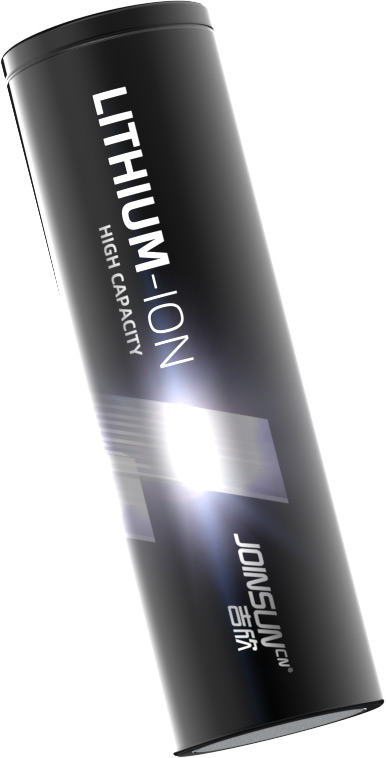
Growth Drivers: The Three New Pillars
1. AI Data Centers and Backup Power (BBU)
(1) Why it matters: The explosive growth of AI computing has created massive demand for reliable, high-capacity backup power.
(2) Key trend: Panasonic has strategically shifted its focus from EV batteries to the data center energy storage market. In uninterruptible power supplies (BBU), 21700 cells are rapidly replacing older 18650 cells due to their higher capacity and better thermal management.
2. High-Performance Hybrid Electric Vehicles (HEVs)
(1) Why it matters: As global pure EV sales slow, HEV demand has surged. HEVs require batteries that combine ultra-high pulse power and extremely long cycle life—characteristics well-suited to advanced 21700 cells.
(2) Example: Molicel's INR-21700-P70X delivers 7000 mAh capacity, supports 30C continuous discharge, and is tested for 1 million cycles—explicitly designed for hybrid applications.
3. Low-Altitude Economy & Premium Applications
(1) Why it matters: eVTOLs (flying taxis), industrial drones, and humanoid robots demand batteries with the highest energy density and power output available today.
(2) 21700's advantage: Its form factor strikes an optimal balance between capacity, power, and heat dissipation for these safety-critical applications.
Technology Evolution: The Path to Solid-State & Silicon
The 21700 battery will see its most significant technological transformation in the next decade, transitioning from traditional liquid-electrolyte lithium-ion to next-generation architectures.
Phase 1: Mid-Term (2028–2032) – Material Innovations
(1) Silicon Anodes: Silicon-dominant anodes are entering commercial production to break the energy density bottleneck of graphite. HPQ Silicon has demonstrated a 21700 (6000 mAh) cell using third-generation silicon anodes with 30%+ longer cycle life than traditional graphite cells.
(2) High-Nickel Cathodes (NMC/NCA): Remain the mainstream choice for the next 3–5 years.
(3) Single-Crystal Technology: Gaining traction to enhance safety, thermal stability, and cycle life.
Phase 3: Long-Term (2032–2036) – Full Solid-State Maturity
By the early 2030s, full solid-state 21700 cells are expected to achieve commercial scale, potentially pushing energy densities beyond 450 Wh/kg while eliminating liquid electrolyte safety risks.
What the 21700 Battery Will Become
By 2036, the 21700 battery will no longer be viewed simply as a physical cell size. It will evolve into a technology platform that integrates:
1. Silicon-based anodes
2. Solid/semi-solid electrolytes
3. All-tab (tabless) design
4. Single-crystal cathodes
Its application scope will expand from consumer electronics and general EVs into critical infrastructure—powering AI data centers, hybrid transportation, and urban air mobility.
Key Competitive Edge Going Forward
In the next decade, the 21700 battery manufacturers that win will be those that excel not just in energy density, but also in:
1. High-power performance (for HEVs and eVTOLs)
2. Ultra-long cycle life (for stationary storage and BBU)
3. Safety and thermal stability (for AI infrastructure and aviation)