Wet Coating vs. Dry Coating: The Fork in the Road for 21700 battery and 18650 battery Manufacturing
Blog | Published by Alex on June 29, 2026
The Hidden Engine Behind Every Cylindrical Cell
For decades, the cylindrical lithium-ion battery—whether the venerable 18650 battery or its larger, more powerful sibling, the 21700 battery—has powered everything from cordless drills to electric vehicles. While much attention is lavished on anode chemistry, cathode materials, and electrolyte formulations, one of the most critical yet underappreciated steps in battery production is electrode coating. This process determines not only the internal structure of the electrode but also the cell's energy density, cycle life, manufacturing cost, and production throughput.
Today, the battery industry stands at a crossroads. On one side lies the wet coating process—a mature, battle-tested technology that has underpinned every major battery boom since the 1990s. On the other side stands the emerging dry coating process—a revolutionary approach that promises to slash costs, eliminate toxic solvents, and unlock higher energy densities. For manufacturers of the 18650 battery and the 21700 battery, the choice between these two routes is not merely a technical decision; it is a strategic bet on the future.
This article provides a comprehensive, side-by-side comparison of wet and dry electrode coating processes, examining their principles, advantages, limitations, and implications specifically for cylindrical cell formats like the
18650 battery and the
21700 battery.
1. The Wet Coating Process – The Workhorse of the Industry
1.1 How It Works
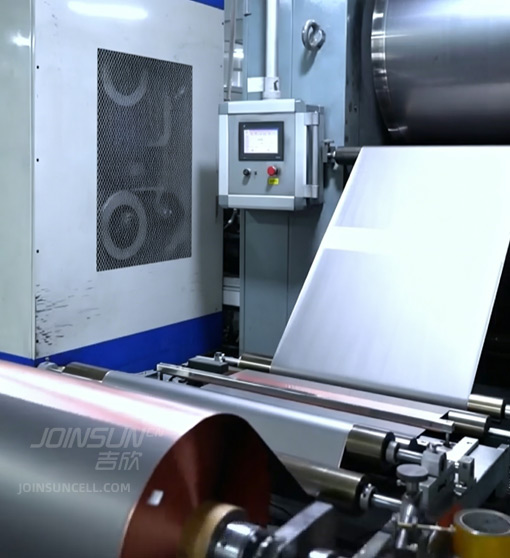
The wet coating process, also known as slurry-based coating, begins with the preparation of a liquid mixture. Active material (e.g., NMC, LFP, or graphite), conductive carbon black, polymeric binder (typically PVDF for cathodes and SBR/CMC for anodes), and a solvent are combined in a high-shear mixer to form a viscous, pumpable slurry. The solvent is either organic—most commonly NMP (N-methyl-2-pyrrolidone) for cathodes—or aqueous—water for anodes.
This slurry is then fed into a coating machine, most often a slot-die coater or a reverse-roll coater, which deposits a thin, uniform wet film onto a moving metal foil current collector—aluminium for the cathode and copper for the anode. The coated foil immediately passes through a long, multi-zone drying oven (typically 10–30 metres in length), where hot air evaporates the solvent, leaving behind a porous electrode structure held together by the binder. Finally, the dried electrode is calendered (compressed) to achieve the desired density and porosity before being slit into strips and wound into the familiar jelly-roll cores of the 18650 battery and the 21700 battery.
1.2 Advantages of Wet Coating
Superior Uniformity and Precision
The wet process benefits from decades of optimisation. Modern slot-die coaters equipped with real-time feedback control can maintain coating thickness tolerances within ±1.5%. This precision is critical for the 21700 battery and the 18650 battery, where even minor variations in electrode loading can cause capacity mismatch, localised overheating, and premature cell failure.
Well-Established Supply Chain and Know-How
Every major battery manufacturer—from Panasonic to LG to CATL—has perfected wet coating over billions of cells. Equipment suppliers are abundant, process parameters are well-documented, and the failure modes are thoroughly understood. For a 21700 battery plant aiming for 200+ ppm (cells per minute), wet coating offers the lowest technical risk.
Flexibility in Material Formulation
The wet process can accommodate a wide range of particle sizes, morphologies, and binder systems. Whether the 18650 battery uses a high-cobalt cathode or the 21700 battery adopts a high-nickel NMC811 formulation, the wet slurry system can be adjusted without fundamental equipment redesign.
1.3 Critical Disadvantages
Massive Energy Consumption
The drying oven is the single largest energy consumer in a battery factory, accounting for roughly 30–40% of total electricity usage. Evaporating NMP or water from a 2–3 metre-wide foil moving at 50–80 m/min requires immense thermal input. For a high-volume
21700 battery gigafactory, this translates into millions of dollars in annual energy bills.
Toxic Solvent Handling and Recovery
NMP, the solvent of choice for cathode slurries, is a reproductive toxicant. Its vapours must be meticulously captured and incinerated or condensed for recycling. The solvent recovery system—complete with scrubbers, condensers, and distillation columns—adds 15–20% to the capital expenditure of a coating line. Even aqueous systems, while safer, produce wastewater that requires treatment.
Binder Migration and Thickness Limitations
During drying, capillary forces pull the dissolved binder toward the surface of the coating as solvent evaporates from the top. This phenomenon, known as binder migration, creates a concentration gradient: the top of the electrode is binder-rich while the bottom (near the current collector) is binder-deficient. This weakens adhesion and limits the practical coating thickness. For high-energy-density designs of the 21700 battery, where thicker electrodes are desirable to reduce inactive components, wet coating hits a ceiling at around 8–10 mAh/cm² areal loading.
Slow Drying and Space Requirements
The drying oven often exceeds 100 metres in total length when including upstream and downstream sections. This colossal footprint increases factory size and drives up building costs—a non-trivial factor for 21700 battery and 18650 battery production lines that already require expansive clean-room environments.
2. The Dry Coating Process – The Disruptive Contender
2.1 How It Works
Dry electrode coating completely eliminates the liquid solvent. The process, pioneered by companies like Maxwell Technologies (acquired by Tesla) and now pursued by numerous startups and incumbents, typically follows one of two routes:
(1) Powder-based calender coating
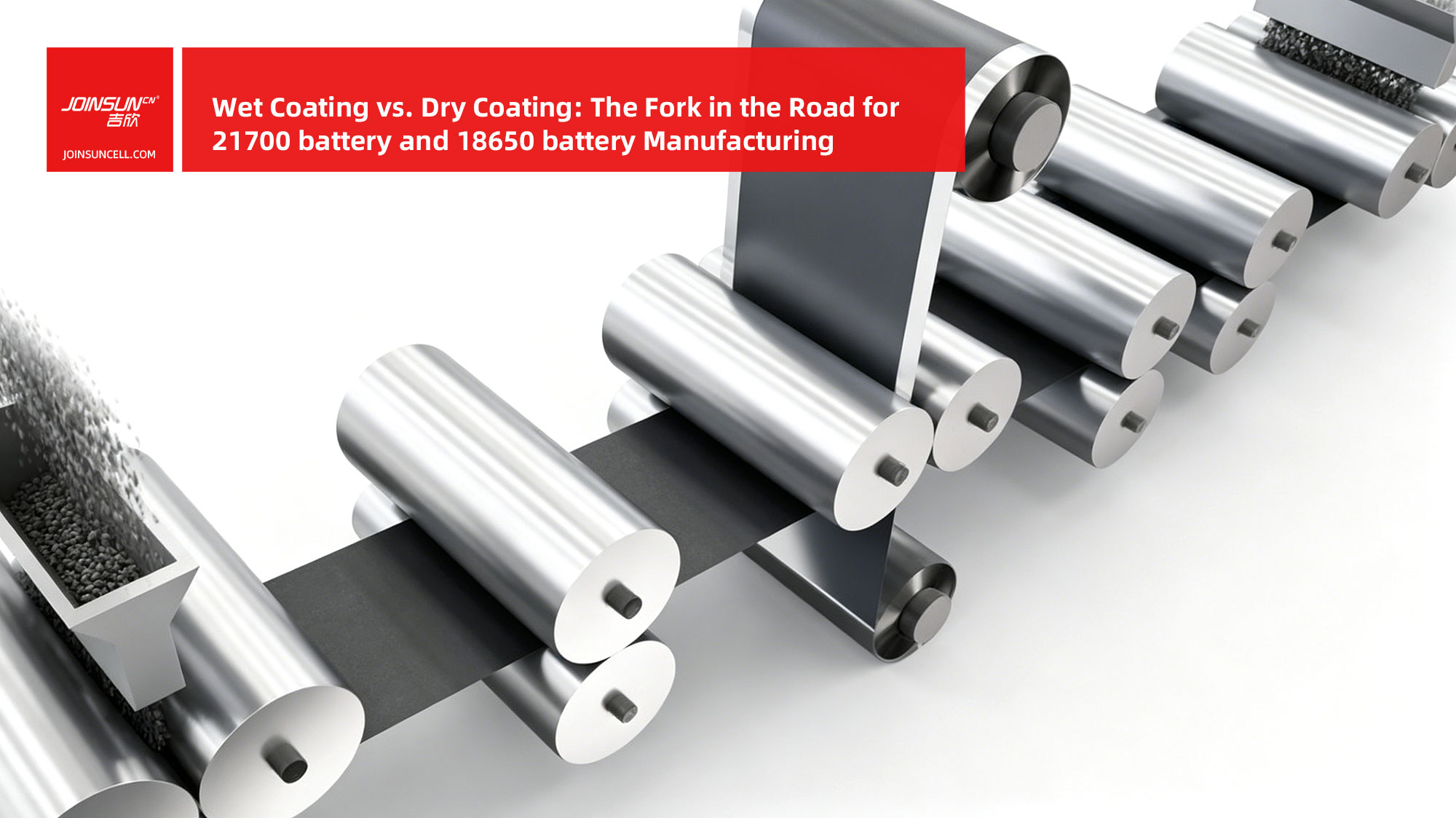
A dry mixture of active material, binder (usually PTFE or other fibrillisable polymers), and conductive additive is subjected to high-shear mixing, which causes the binder to form microscopic fibres that entangle the particles. This dry, free-flowing powder is then fed into a calender (roller press) where it is compacted directly onto the current collector foil under high pressure and, in some cases, elevated temperature. The resulting self-supporting film adheres to the foil without any drying step.
(2) Electrostatic spray deposition (ESD)
Charged dry particles are aerosolised and sprayed onto a grounded foil, followed by thermal or pressure consolidation.
In both variants, the coated foil emerges dry and ready for calendering, slitting, and winding into the familiar cylindrical cores of the 18650 battery and the 21700 battery—all without a single drying oven.
2.2 Advantages of Dry Coating
Dramatic Energy and Cost Savings
By eliminating the drying oven, dry coating cuts the energy consumption of electrode production by an estimated 50–70%. Moreover, NMP recovery systems become entirely redundant. Industry analysts project that a switch to dry coating could reduce total battery manufacturing costs by 15–30%—a game-changing margin for a 21700 battery designed for price-sensitive EV applications. At the cell level, this translates to a potential reduction of $5–8 per kWh, enough to accelerate EV parity with internal combustion engines.
Thicker Electrodes, Higher Energy Density
Without binder migration, dry-coated electrodes can be made substantially thicker—up to 1.5–2× the loading of wet-coated counterparts—while maintaining uniform binder distribution throughout the thickness. For the 21700 battery, this means more active material per cell and fewer current collector tabs, separator layers, and can materials per unit of capacity. The result is a direct boost in gravimetric and volumetric energy density, potentially pushing the 21700 battery beyond 300 Wh/kg at the cell level.
Faster Production Throughput
Dry coating can operate at line speeds of 80–100 m/min, comparable to or exceeding wet coating, but without the bottleneck of the drying oven. The reduced equipment footprint also allows more coating lines to be installed in the same factory floor space, increasing the total output of 18650 battery or 21700 battery production facilities without expanding the building footprint.
Environmental and Regulatory Benefits
Zero solvent emissions means no air permits for VOCs (volatile organic compounds), no solvent waste disposal, and a safer workplace free from NMP exposure. This simplifies regulatory compliance and improves the ESG (Environmental, Social, Governance) profile of a 21700 battery manufacturer—an increasingly important factor for investors and automotive OEMs.
2.3 Current Limitations and Technical Hurdles
Despite its promise, dry coating is not yet ready to fully replace wet coating for high-volume production of the 18650 battery and the 21700 battery. Several formidable challenges remain:
Binder Innovation Lag
The fibrillisation mechanism relies on specific polymer binders—mostly PTFE (polytetrafluoroethylene) and its derivatives. These binders are not electrochemically inert at high voltages; PTFE can decompose on the cathode surface above 4.3 V, releasing corrosive HF. Developing new dry-process-compatible binders that are stable, processable, and affordable is an active but incomplete area of research. For the 21700 battery, which often operates at 4.2V~4.3V to maximise capacity, this is a critical concern.
Poor Powder Flow and Uniformity
Dry powders are notoriously difficult to meter and distribute evenly at high speed. While wet slurries are self-levelling liquids, dry powders tend to agglomerate, segregate by particle size, and create pinholes or streaks in the coating. Achieving the ±1.5% uniformity that the 18650 battery and the 21700 battery require for consistent safety and cycling performance remains an unsolved challenge at commercial scale. Many dry-coated pilot lines report uniformity variations of ±5–8%—unacceptable for automotive-grade cells.
Adhesion and Mechanical Integrity
Without the chemical bonding that occurs during wet slurry curing, dry-coated films can exhibit weaker adhesion to the current collector. In the high-vibration, high-temperature environment of an EV-powered 21700 battery, delamination and particle shedding become serious risks that can short-circuit the cell or accelerate impedance growth.
Line Speed and Scalability
Although dry coating is theoretically faster, current commercial dry coaters operate at about 50–60% of the line speed of mature wet coaters. The calender consolidation step requires heavy-duty rollers with precise gap control, and scaling this equipment to the widths required for large-format electrode production—often 1–1.5 metres—poses significant mechanical engineering challenges.
3. Direct Comparison for Cylindrical Cell Formats
| Metric |
Wet Coating |
Dry Coating |
| Capital cost per GWh |
Baseline |
~20–30% higher (current) |
| Operating cost per GWh |
Baseline |
~15–25% lower (projected) |
| Energy consumption |
High (drying oven) |
Very low (no drying) |
| Coating uniformity |
±1.5% (proven) |
±5–8% (current pilot) |
| Max areal loading |
~8–10 mAh/cm² |
~15–20 mAh/cm² (demonstrated) |
| Cell energy density |
250–280 Wh/kg (21700 battery) |
300–330 Wh/kg (projected) |
| Cycle life |
1000–1500 cycles (proven) |
600–900 cycles (current data) |
| Solvent handling |
NMP recovery required |
None |
| Maturity |
TRL 9 (mass production) |
TRL 6–7 (pilot to early production) |
4. The Strategic Outlook for 18650 battery and 21700 battery Manufacturers
4.1 Near-Term (2024–2028): Wet Coating Dominates
For at least the next three to five years, wet coating will remain the undisputed production standard for both the 18650 battery and the 21700 battery. The technology is proven, the equipment is readily available, and the quality assurance systems are robust. Manufacturers like Panasonic (which supplies the 21700 battery for Tesla's Model 3 and Y) and Samsung SDI (a major supplier of the 18650 battery for power tools and consumer electronics) continue to invest in incremental improvements to wet coating—such as faster drying by ultrasonic nozzles, solvent recovery with heat pumps, and water-based binders that reduce NMP use.
The transition away from wet coating will not be a sudden switch but a gradual migration, starting with pilot lines that produce low-volume, high-margin cells for premium applications.
4.2 Mid-Term (2028–2033): Hybrid Approaches Emerge
The most likely scenario is not a clean break but a hybrid strategy. For cathodes, which require high-voltage stability, the industry will likely continue using wet coating with advanced binders or adopt dry coating only for the anode (where the binder stability requirement is less stringent). A 21700 battery with a wet-coated NMC cathode and a dry-coated graphite/silicon anode could achieve 80% of the dry coating benefits while mitigating the largest technical risks.
4.3 Long-Term (2033+): Dry Coating Becomes the Standard
As binder chemistry evolves—with new materials like polyimide, polyamide-imide, or even inorganic binders entering the market—dry coating will overcome its uniformity, adhesion, and cycle-life shortcomings. At that point, the cost and energy advantages will become overwhelming. The 21700 battery and the 18650 battery produced in the 2030s will almost certainly be dry-coated, delivering 300+ Wh/kg at a cost that makes wet coating look as antiquated as hand-pasting electrodes.
Synthesis: Not a Technological Obsolescence but a Generational Leap
To answer the implicit question posed at the outset: Wet coating for the 21700 battery and the 18650 battery is not "backward" or "obsolete." It remains the most advanced, most reliable, and most cost-effective production method available at scale today. Calling it "outdated" would be like calling the internal combustion engine "obsolete" in 2010—technically true in a long-term sense, but practically irrelevant in the present.
However, the battery industry is historically defined by step changes, not gentle evolutions. The shift from the 18650 battery to the 21700 battery itself was a geometry upgrade that required retooling entire factories. The shift from wet to dry coating is a more profound transformation—one that changes the physics of how electrodes are made, not just their dimensions.
For today's engineers and production managers, the priority is to maximise the efficiency and quality of wet coating lines while actively piloting dry coating for next-generation products. For tomorrow's executives and investors, the priority is to place bets on dry coating technology providers and binder innovators, because the first company to crack the code for a dry-coated 21700 battery that matches or exceeds wet-coated cycle life will own the electric vehicle and energy storage markets for the next decade.
In the end, the wet vs. dry debate is not a battle between obsolete and advanced; it is a passing of the torch between two eras of manufacturing genius. The 18650 battery and the 21700 battery will witness both—and their evolution will continue to power our electrified future.